I can’t spend $1,000 on a smartphone. I just can’t. I’ve walked into countless phone stores, credit card in hand, with every intention of buying the latest flagship. I walk up to the demo area, wake the handset I’ve already decided to buy and spend a few moments swiping through the app drawer, willing myself to follow through on the purchase. My throat tightens and a few minutes later my legs are moving involuntarily out the door and down the street.
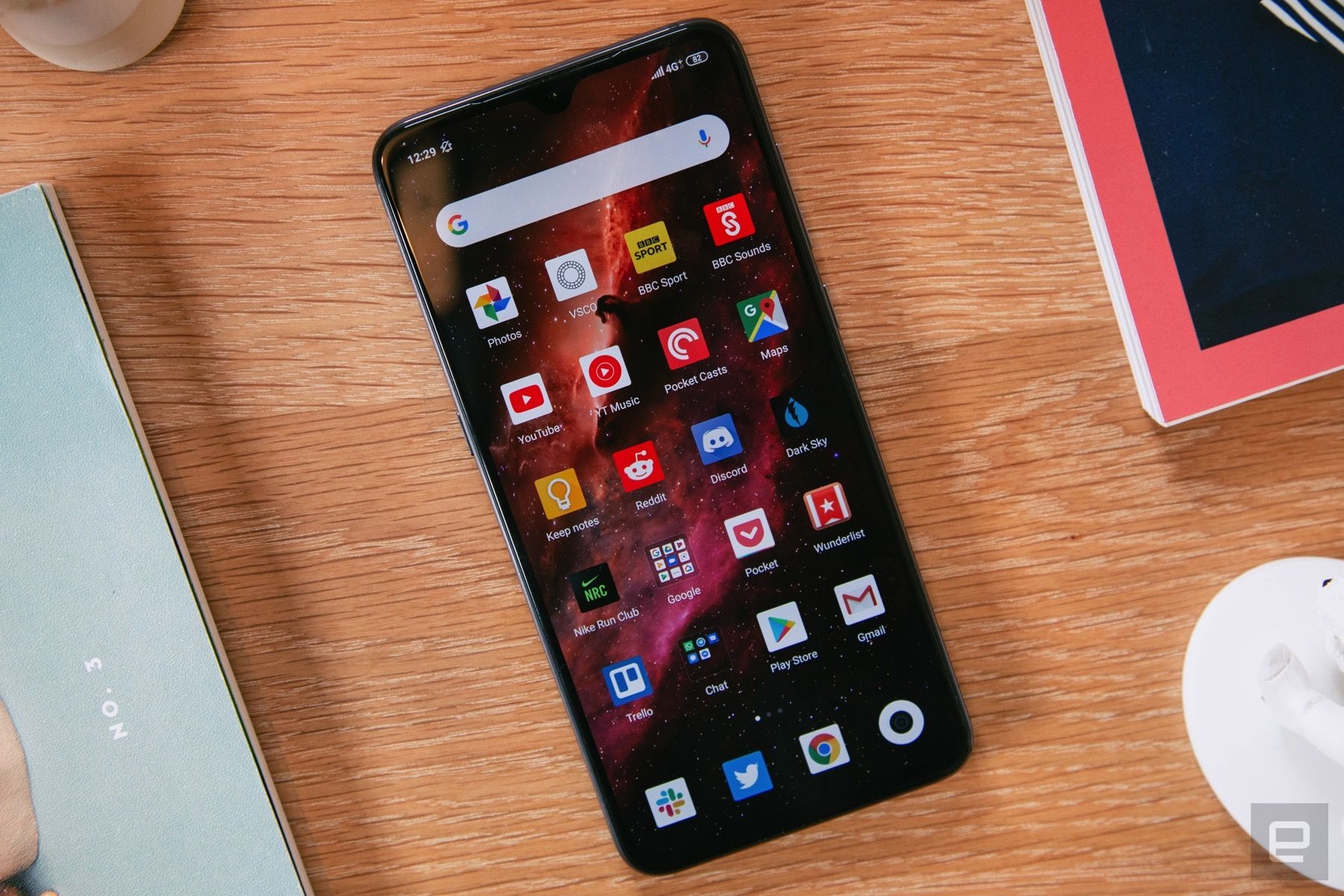
It’s been this way for years. I love high-end smartphones but can’t stomach the price-tag when I think about the rent, bills and unpaid student loans waiting for me at home. Instead, I’ve veered toward OnePlus and similar brands that offer flagship performance at two-thirds, or sometimes even half the price of phones from likes of Samsung, Google and Apple. And now, Chinese giant Xiaomi has finally entered Europe, including the UK. That makes its latest flagship, the glossy Mi 9, a tantalizing prospect for people like me, who want the best, or close enough, on a tighter budget.
Plenty of other phone manufacturers have proven that you can build a device with flagship-level performance for under $600. These handsets are often tremendous but fall short in one key area: photography. “Good enough” is how I
Xiaomi wants the Mi 9 to be more than good
The phone’s primary shooter uses a 48-
To be honest, I rarely used the Mi 9’s 12-
I used the ultra-wide-angle camera even less. It was occasionally useful for capturing landscapes, group shots and, given
You can literally put star-shaped reflections in your eyes.
You can
The phone also has an AI mode that analyzes the scene and picks settings depending on what it thinks you’re trying to shoot. There are also various timers, tilt-shift and panorama options. I was most drawn to the Pro mode, however, which lets you choose the white balance, shutter speed and ISO.
On the video side, you can shoot at 4K and 1080p resolution at either 30 or 60 frames per second. If you switch to the ultra-wide-angle lens, however, you’re stuck with 30 fps at 4K resolution. The resulting footage is fantastic for a smartphone and could
Moving across from
MIUI, however, has come a long way in the last few years. Like Samsung, the company has slowly evolved its design language into something that is mostly tolerable, occasionally delightful and recognizably different from so-called stock Android. The Mi 9 runs MIUI 10 (I spent most of my review on MIUI 10.2) the latest and best version of Xiaomi’s skin. I still prefer Google’s Pixel launcher and lighter alternatives such as Oxygen OS, but it’s
Well, that’s provided you can stomach one massive difference from vanilla Android: the app drawer, or lack thereof. It’s a big, glaring omission that has always been a cornerstone of the MIUI experience. And, unsurprisingly, it’s the first way that critics draw comparisons with
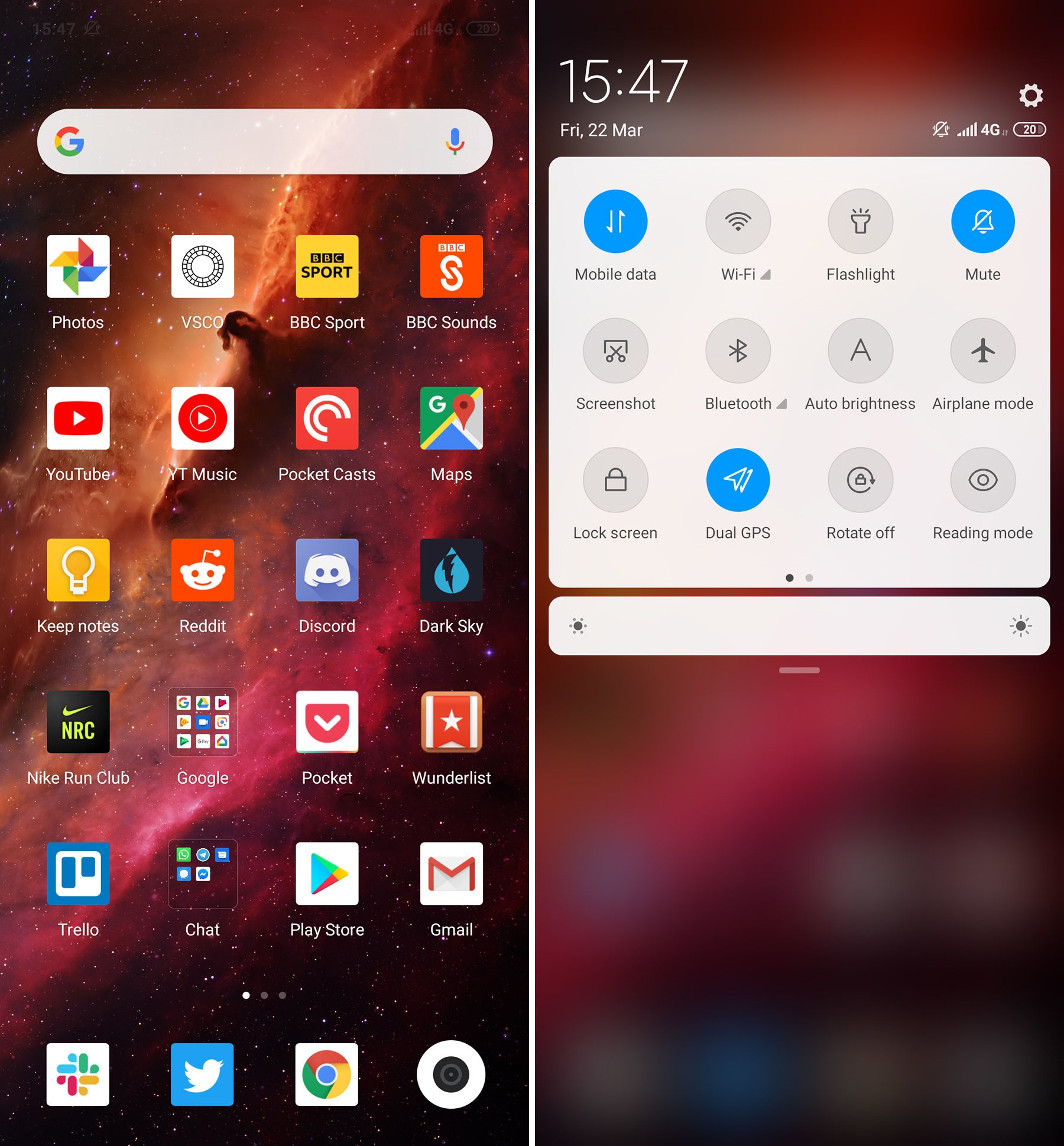
I normally have two home screens: one filled with apps, the other with a stretched-out calendar widget. Transitioning to MIUI, therefore, took
Otherwise, there’s a lot to like in MIUI 10. The notification shade is clean, legible and customizable, with plenty of shortcuts you can organize across two distinct pages. The app switcher, which uses two vertical columns, makes it dead simple to find and dismiss recently used applications. The small app cards are a great use of space, too, and ensure you’re never scrolling for long. Honestly, I think it’s better than the Pixel launcher, which only shows your current app and a hint of two others.
The system settings
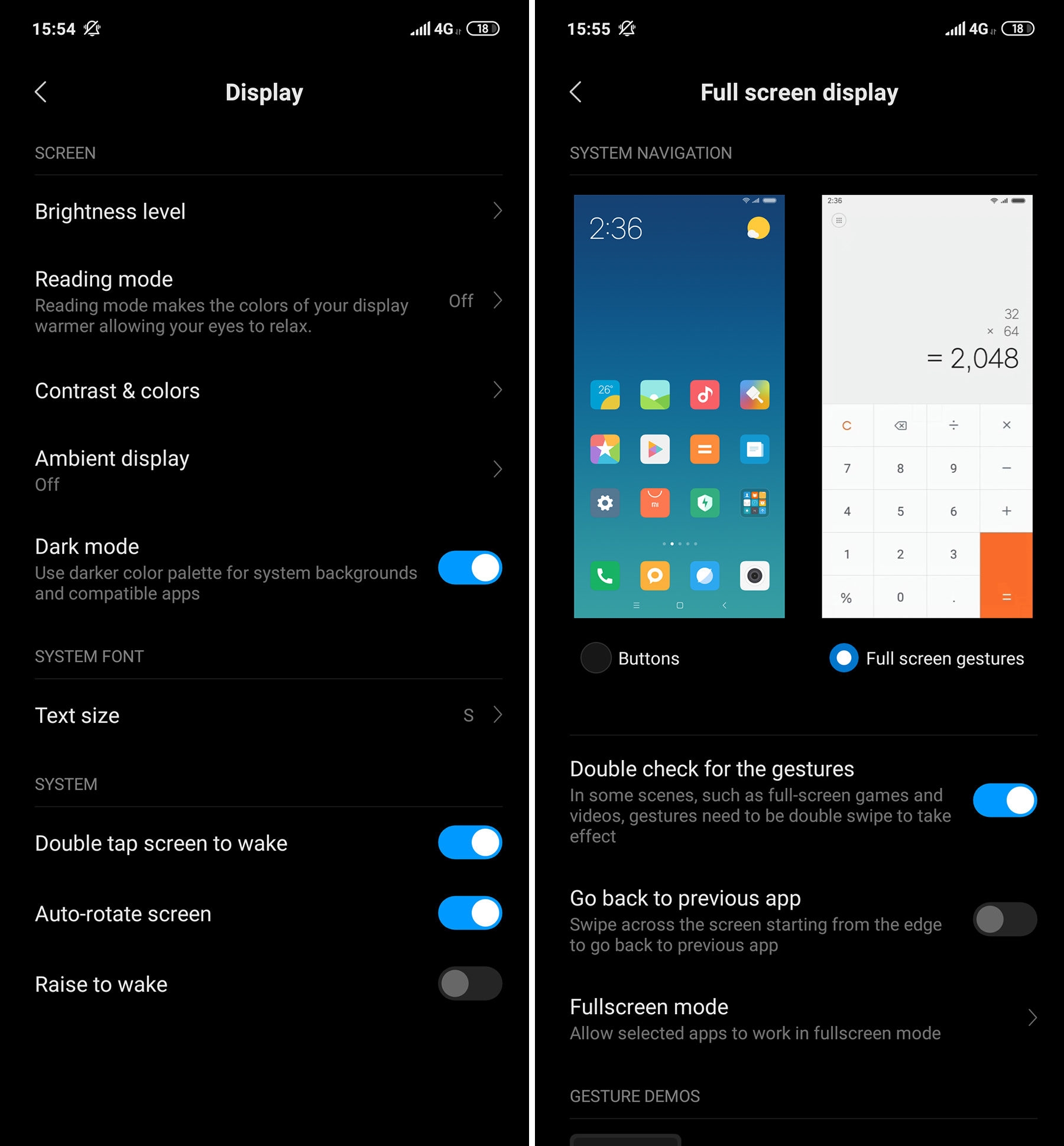
Choosing gestures will
Thankfully, Xiaomi’s software ambitions don’t stretch to the voice-enabled assistant. Pressing and holding the AI button on the left side of the device will trigger the helpful Google Assistant by default.
MIUI 10 doesn’t drag down the phone’s day-to-day performance, crucially. The Mi 9 uses Qualcomm’s high-end Snapdragon 855 chipset and a more than respectable 6GB of RAM. Games, photo and video editing
Battery life, however, was underwhelming. The Mi 9 ships with a 3,300mAh cell, which is a fraction smaller than the Mi 8. Why Xiaomi made this decision, I
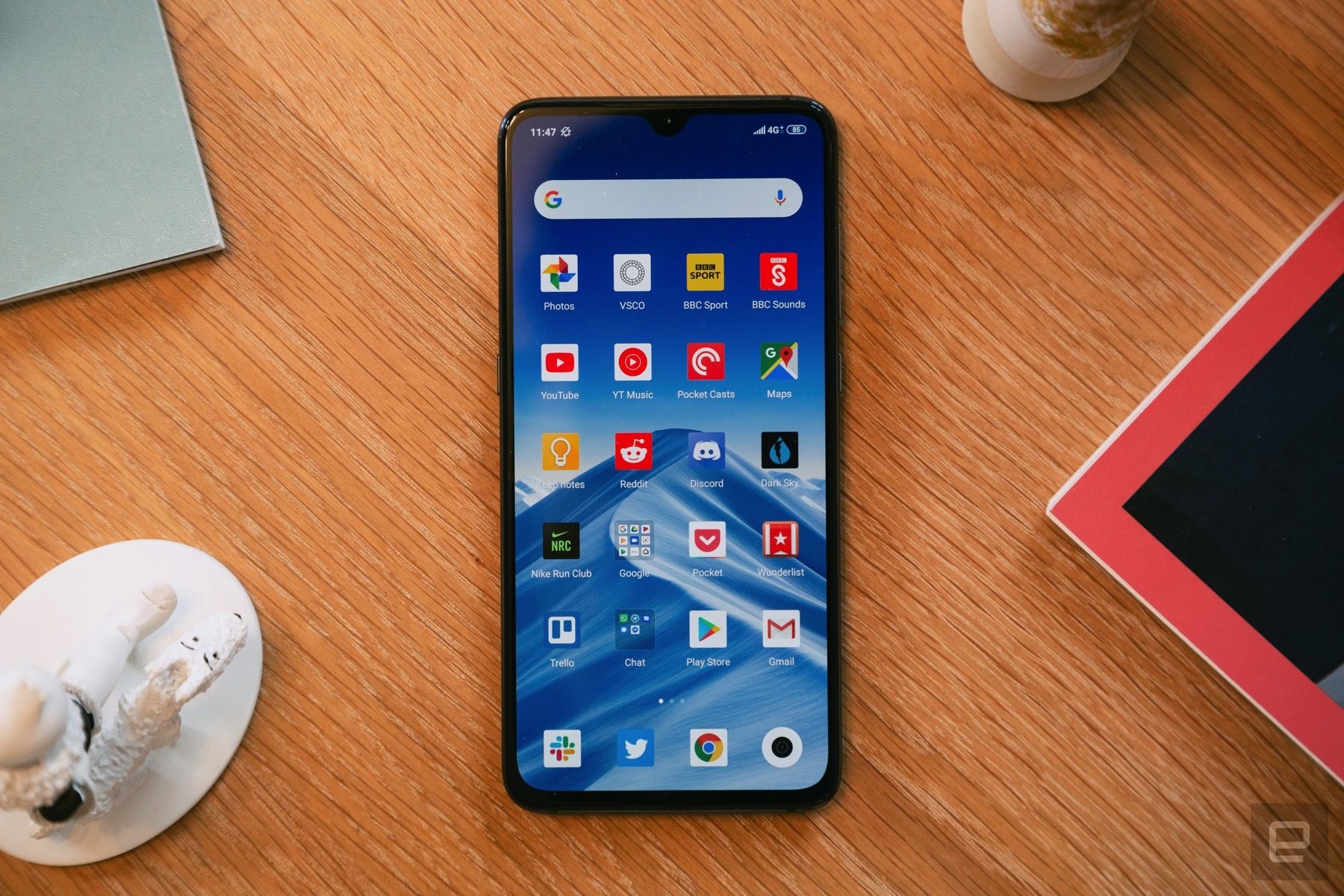
The Mi 9 isn’t perfect. The phone doesn’t have a headphone jack, for instance, and can’t survive underwater. If you can live with the
The OnePlus 7
If you live in China or Europe, however, the Mi 9 is worth considering. The phone costs €449 (roughly $512) for 64GB of storage and €499 (roughly $570) if you want 128GB instead. These prices are, to put it bluntly,
I know how I’d spend my money.
| Xiaomi Mi 9 | |
| Processor | Qualcomm Snapdragon 855 |
| RAM / storage | 6GB / 64GB or 128GB |
| No | |
| Display | 6.39-inch Samsung AMOLED |
| Display resolution | 2340 x 1080 (19:6) |
| Rear cameras | 48MP primary camera ( |
| Front-facing camera | 20MP with 0.9µm |
| OS | MIUI 10 |
| Battery | 3300mAh |
| Charging | Up to 27W wired fast charging. Up to 20W wireless charging. |
| Dimensions | 157.5mm x 74.67mm x 7.61mm |
| Weight | 173 grams |
| Fingerprint sensor | Yes, optical in-screen |
| Waterproofing | No |
| NFC | Yes |
| Headphone jack | No |
All products recommended by Engadget were selected by our editorial team, independent of our parent company, Verizon Media. If you buy something through one of our links, we may earn an affiliate commission.
(70)

