Maui’s new temporary homes show what better disaster housing can look like
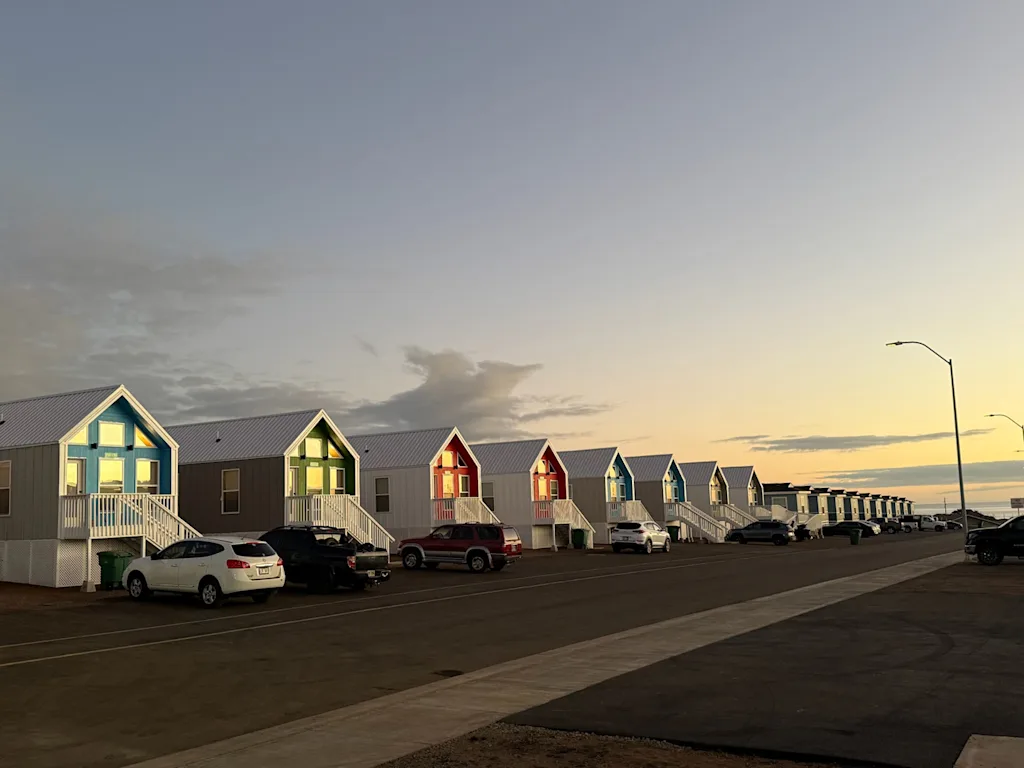
Sitting on a hillside between the mountains and the ocean in Lahaina, Hawaii, this new neighborhood of brightly-colored cottages did not exist a year ago.
The houses—most of which were built in factories in Colorado and Idaho and delivered to Maui on a barge—are temporary homes for families who lost everything in the Lahaina wildfires in 2023. They’re also a new type of housing for the Federal Emergency Management Agency (FEMA).
Built to meet local and international building codes, they’re very different from the cheap, toxic trailers that FEMA deployed 20 years ago, when Hurricane Katrina displaced hundreds of thousands of people. Some of those trailers had formaldehyde levels that were 75 times greater than safe levels. They were poorly insulated and never meant for long-term housing, but some families were stuck in them for years.
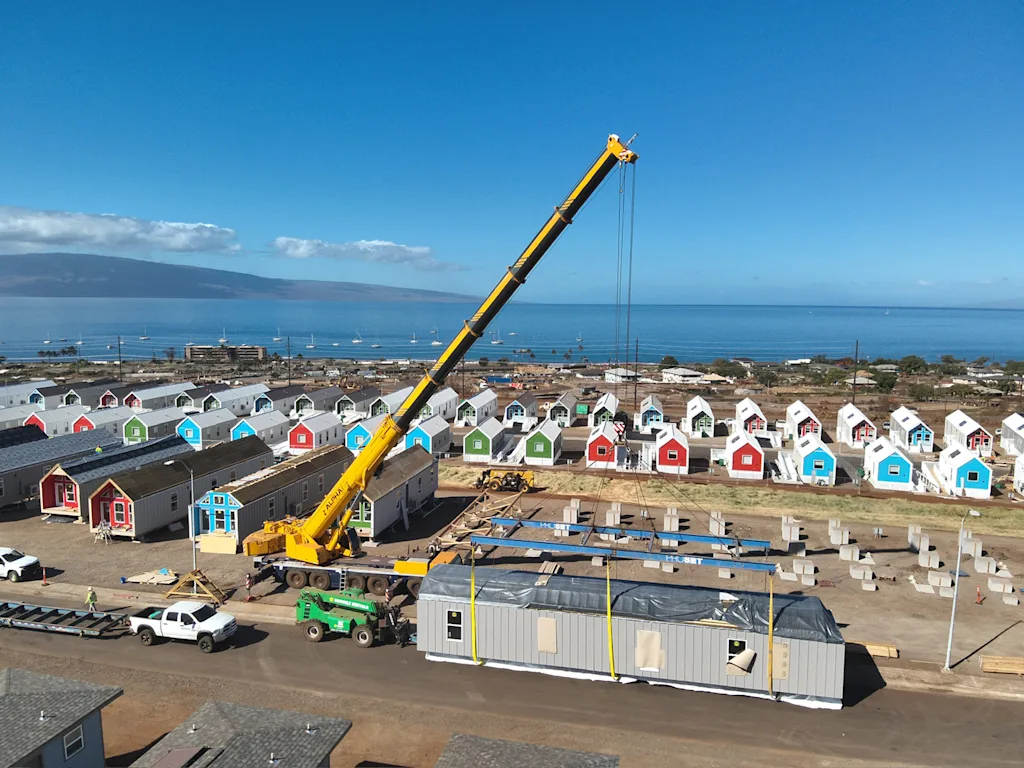
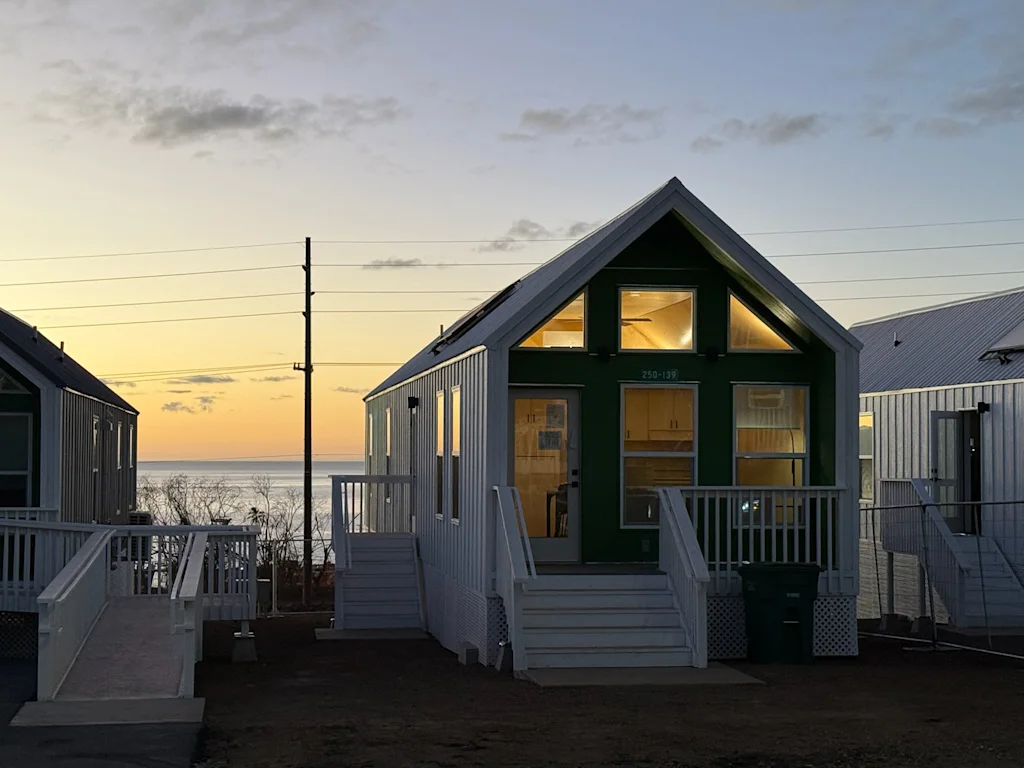
The cottages in Hawaii, by contrast, use materials chosen to maintain healthy air quality. The homes are filled with light, with huge windows and high ceilings. They were built to be durable, with the potential to be turned into affordable long-term housing after their temporary use.
They could be a model for future disaster response. But as the Trump administration pushes to dismantle FEMA, it’s not clear what will happen to the homes now—or what will happen during the next disaster.
Rethinking disaster housing
Liv-Connected, the New York City-based modular home company that designed most of the new Hawaiian cottages, didn’t originally plan to build disaster housing. But the startup, founded in 2019, got attention from the disaster relief world after it made some early prototypes.
The company’s first goal was to lower costs by making transportation easier for modular homes. The team saw the potential of building Lego-like homes efficiently in factories, but it also saw that other modular companies had failed in part because the homes were expensive to move, and building big factories in multiple locations was even more expensive.
“We just said, all right, our modular can be different—it’s going to fit on a flatbed truck,” says Jordan Rogove, CEO and cofounder of Liv-Connected. “We worked backward from there: How do we get a really great house that fits on a standard flatbed?”
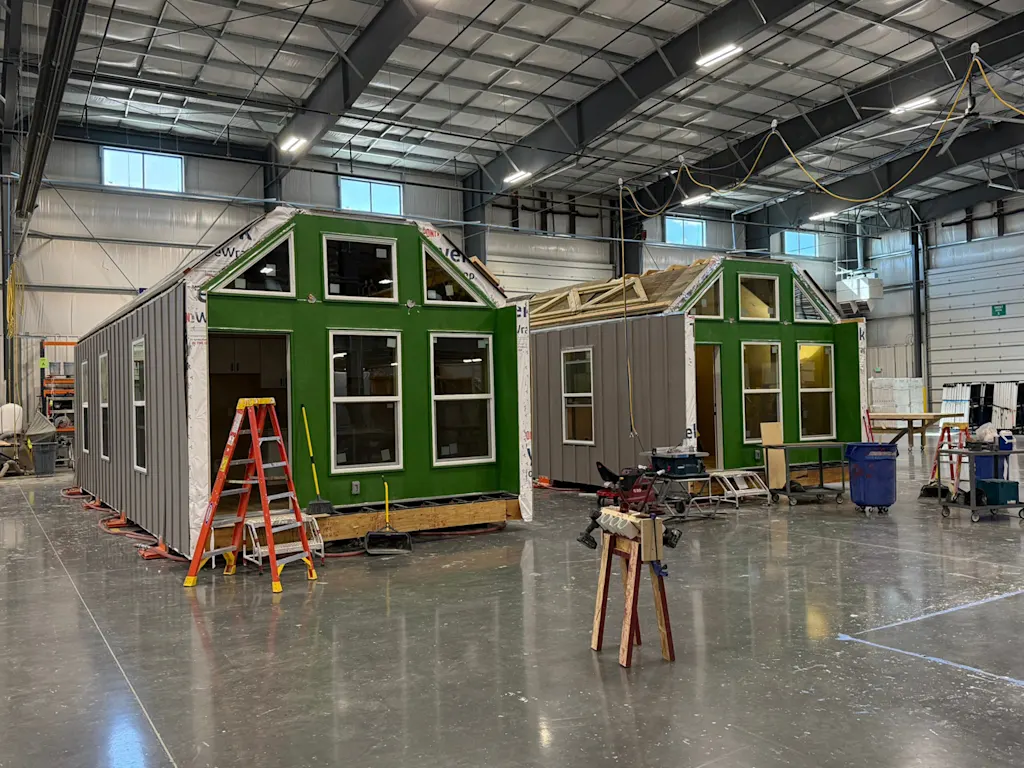
While shipping a fully constructed “volumetric” modular house might require a couple of oversize trucks and cost $16 to $18 a mile, a home that fits on a flatbed truck could cost $2 to $3 per mile instead. The company’s basic design includes some fully built pieces, like the kitchen and the bathroom. But most of the house can be flat-packed and then quickly assembled on-site.
The installation in Hawaii turned out to be different. Because the homes needed to travel more than 2,000 miles over the open ocean on a barge, it made sense to fully build each house and ship them in complete, watertight sealed units. (Future homes delivered to the continental U.S. could use the less expensive flat-packed version.) But there were other reasons that FEMA picked Liv-Connected to provide more than 100 homes for the site.
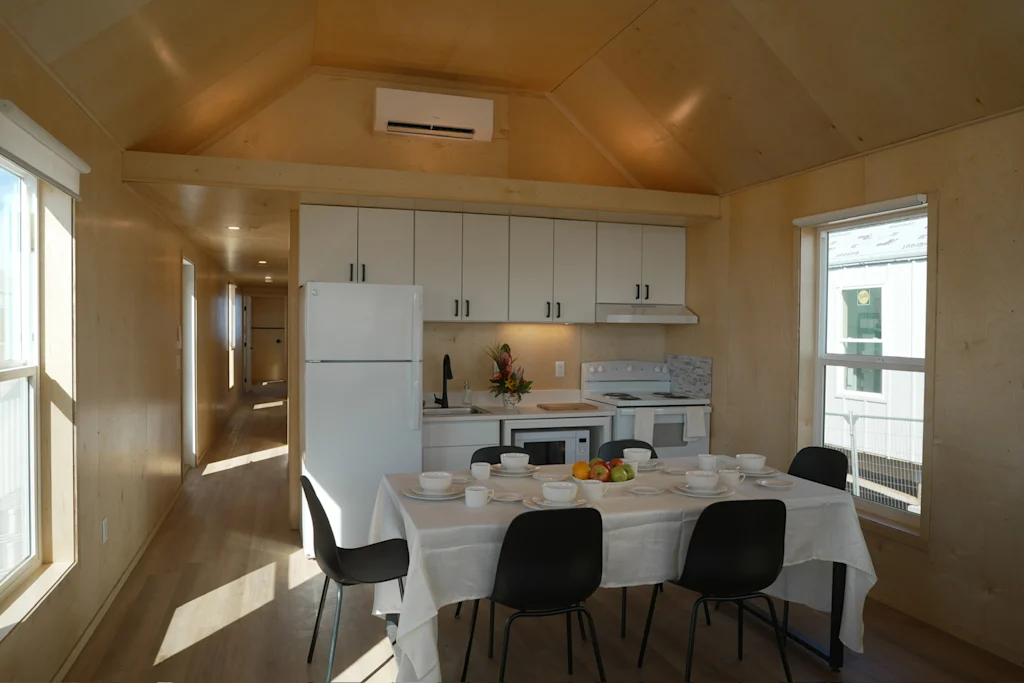
The houses—which range from a 480-square-foot one-bedroom unit to a 980-square-foot three-bedroom home—are designed to help improve well-being, with high ceilings, wood-paneled walls, and outdoor views. “It’s just more generous and dignified,” Rogove says. “Our understanding of providing accommodations like that is that healing happens a lot faster.”
Outside, the homes are painted in different colors, both as a nod to buildings that were lost in the fire and to help the development feel more like a neighborhood. “I think the issue with those FEMA trailers is that they’re all identical, and then it starts to have this quality of barracks,” he adds. “So there isn’t a sense of neighborhood or a community.”
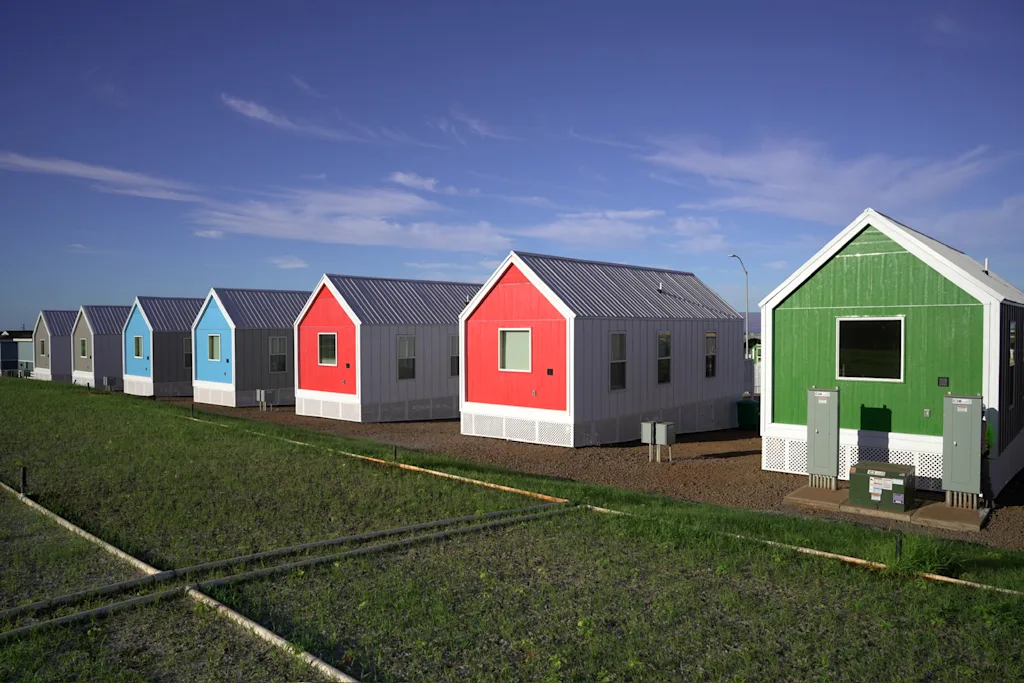
The homes are also designed to last, with fire-resistant siding and tight insulation. They could stay in good condition for decades, versus months or a few years for an old FEMA trailer. “In our discussions with FEMA, you really need to do better for people,” Rogove says. “If you are willing to spend upward of 20% to 30% more than you would for a trailer, you can have a home that could be used for up to 30 years. So it could be deployed multiple times as opposed to a single deployment and then basically tossed into the garbage.”
Building the neighborhood
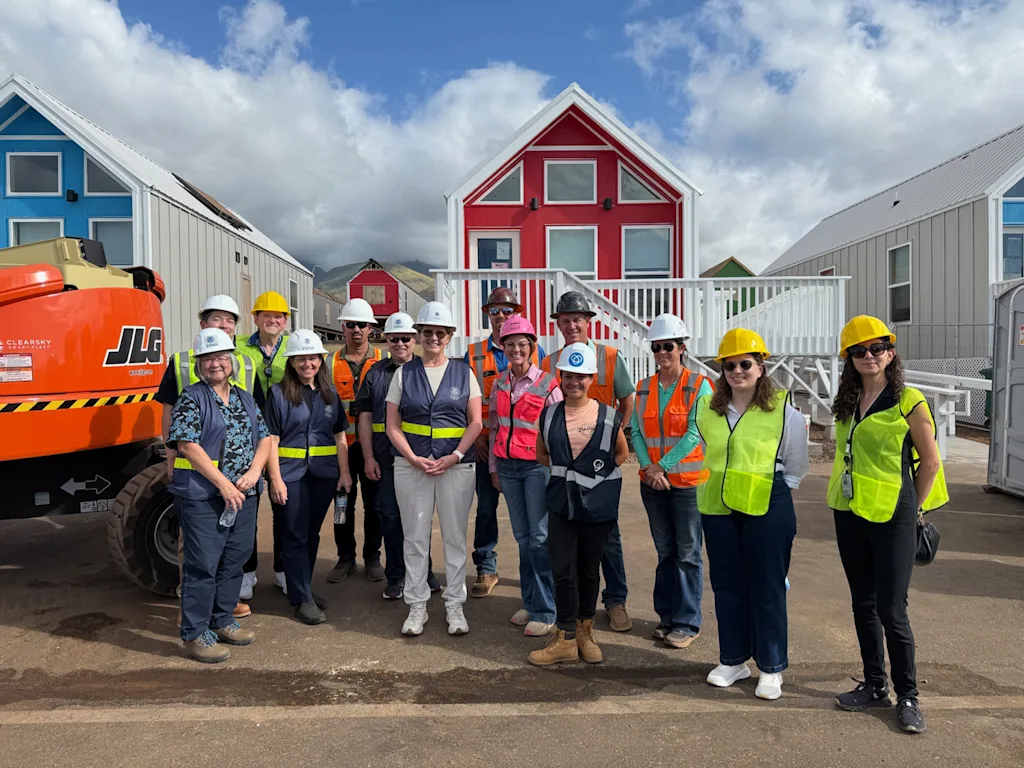
After the wildfires in August 2023, FEMA invited developers to submit proposals for the homes the following March. In late June last year, Liv-Connected learned that it was selected to provide 109 homes in a first installment. (Two other companies provided a smaller number of houses, with 167 total in the development.) Then it worked with two manufacturing partners to begin building. One of FEMA’s requirements was that the homes would be delivered by November 2024.
“We effectively had about two months to build 109 homes,” Rogove says. “And then another two months to have all of them installed.” At the same time, engineers were preparing the site. Hawaii offered state-owned land for FEMA’s temporary use at no cost.
At a Colorado factory owned by Liv-Connected’s partner Fading West, a crew of workers spent 12-hour days on the project, building as many as 10 homes each week. Guerdon Modular Buildings, in Idaho, was contracted to build the final 25 homes, and it finished in two weeks. Then the houses were trucked to the Port of Seattle and spent three weeks on a barge to Maui. Just before Thanksgiving, families started moving in.
The process was incredibly fast, although the factories say that it could be even faster if FEMA could preapprove particular designs. “If FEMA had a library of preapproved modular plans, we could start production within seven to 10 days of a natural disaster,” Tommy Rakes, CEO of Guerdon, said in one case study of the project. “These homes could be shipped anywhere in the continental U.S. in three to five days, installed, and occupied within a day. In under three weeks, displaced victims could have permanent homes.”
Having additional factories in some areas could also help. Fading West has talked to the Hawaiian government about the possibility of setting up a local modular housing factory to avoid long-distance transportation. The state also sees the potential for modular housing as a way to help it deal with the affordable housing crisis.
An uncertain future
In FEMA’s original plan, families would have up to five years to live in the homes in Lahaina, paying a fair market rent that’s limited to 30% of a household’s gross income. But the development may now close as soon as next February. FEMA would have to grant an extension to the state to keep it open later and continue providing financial assistance. The agency says that the state’s request is currently under review, but it didn’t provide more details.
It’s not clear what will happen next, or where the homes will end up when the project ends. Trump has called for eliminating FEMA and tried to cut billions in disaster funding. FEMA originally planned to build another 231 modular disaster relief homes in Lahaina, Rogove says, but that doesn’t appear to be moving forward. “It’s been absolute silence,” he adds. “So I think the likelihood of that happening seems to decrease day by day.” FEMA says that it isn’t planning another 231 homes.
In future disasters, it’s not clear how FEMA will handle housing or what role modular homes will play, though the agency says that modular homes may be considered when they’re a fit for local requirements. It’s possible that states may push the solution forward faster. In Maui, the state of Hawaii partnered with a nonprofit developer on another modular neighborhood built near the FEMA site. Texas has explored the idea of building modular housing in advance and storing the units in warehouses in key cities—ready to deploy in a disaster. In California, Liv-Connected and other modular housing manufacturers are offering options to residents trying to rebuild after the Los Angeles fires.
“What we’ve seen so far is states stepping in to fill the gap, in the absence of the clear organizational order that was there before,” Rogove says. “I think that’s probably what it’s going to look like for the next several years. That fills me with hope for the states that have the capacity to do that. And I have a lot of reservations for states that don’t have those types of resources.”
In Hawaii, the state government says that FEMA’s assistance has been critical over the last several years through hurricanes, flooding, fires, and volcanic activity. “While state, local, and private resources have supported recovery, they are limited in scale and speed,” Gov. Josh Green wrote in a recent letter about the agency. “Timely federal deployment remains crucial to meeting the needs of affected communities.”
ABOUT THE AUTHOR
(21)
